Phase One Launches P 40+ with Sensor+ Medium format camera quality plus hand-held flexibility in one system
COPENHAGEN, April 30, 2009 -- Phase One, the leader in open-platform based medium format camera systems and solutions, today announced immediate availability of the Phase One P40+ -- the company’s second Sensor+ enabled digital camera back/camera system.
Like the P 65+ introduced last year, this new system offers two separate image-capture modes. In normal mode, the P 40+ delivers full 40 megapixel captures for high-quality image details. And when shooting conditions demand, a photographer can push a button and instantly switch from 40 megapixels to 10 megapixels, gaining a four-fold increase in light sensitivity (ISO to 3200), and a capture rate of up to 1.8 frames per second --an ideal performance for hand-held and/or low-light conditions.
“Our second Sensor+ enabled system has been designed to deliver the fastest capture rate of any high-end medium format camera system on the market today,” said Jan H. Christiansen, marketing director for Phase One. “Our relentless innovation is inspired by the needs of quality-conscious professional photographers who seek flexible and reliable camera systems that can work as hard as they do.”
The versatility of the P 40+ system is important for those who seek quality medium format 16-bit capture under a variety of working conditions. Both modes feature a 12.5 f-stop dynamic range. From high-end wedding, fashion and fine-art photographers to photojournalists, the choice of capture modes in a single camera system frees photographers to focus on the job at hand rather than worry over equipment. Best results of Sensor+ technology are available by processing images using Phase One Capture One software version 4.8 or higher.
Technical specifications: P 40+ full resolution capture mode:
Resolution: 40 megapixels
Pixel size: 6 x 6 micron
RAW file compression:
IIQ large: 40 MB
IIQ small: 26 MB
ISO: 50, 100, 200, 400, 800
Capture rate: Up to 1.2 frames per second
Phase One P+ camera back mounts: Phase One 645 AF, Mamiya 645AFDII/ AFDIII, Mamiya RZ67 PRO IID via adaptor, Hasselblad H1 and H2, Hasselblad 555ELD, 553ELX, 503CW and 501CM, Contax 645.
Wide angle & technical cameras: 4 x 5” via FlexAdaptor: Arca Swiss, Cambo, Linhof, Toyo, Sinar, Plaubel, Horseman.
Pricing & Availability The P 40+ digital back starts at €14,990; the P 40+ camera system starts at €16,990.
About Phase One Phase One is a leading provider of digital image capture and work flow management technology. Phase One 645 Camera Systems and P+ digital backs open new possibilities, putting the focus back on the moment of capture. Phase One Capture One software helps streamline the capture and post-production process. Supporting DSLR, medium- and large format photographic equipment, Phase One products are renowned for their superior quality, flexibility and speed — enabling pro photographers to realize their most subtle and most complex visions without compromise.
Phase One is an employee-owned company based in Copenhagen with offices in New York, London, Tokyo, Cologne and Shanghai. For more information please, visit the Phase One web site on www.phaseone.com.
Phase One and Capture One are registered trademarks of Phase One A/S. All other brand or product names are trademarks or registered trademarks of their respective holders.
I would be remiss if I failed to talk about other medium format systems that offer an extensive solution for landscape and architectural photography. Case in point: Hasselblad. Long time purveyor of medium format cameras, Hasselblad has gone digital in a very big way. Their H-System is currently on its fifth generation with the H3D-II, and with it Hasselblad has decided to take a systems approach to medium format. Think of them as the Apple of medium format.
The H-System also include a set of matched lenses that, like lenses on 35mm systems, transmit a wealth of information back to the camera for use in adjusting and correcting the image in post production. There are 5 HC/HCD lenses available currently ranging from HCD 28mm (equivalent to 14mm in 35mm format) to the HC 100mm.
So how is this a technical camera, there are no tilt/shift lenses?
Funny you should ask. Hasselblad elected to create an accessory that converts all five HC/HCD lenses into tilt/shift lenses: the HTS 1.5. So in one fell swoop, Hasselblad has trumped the other general purpose medium format camera makers by introducing five tilt/shift lenses.
Front of the HTS 1.5
Rear of the HTS 1.5
As you can see above, the HTS has passthrough contacts that allow the full functionality of the HC/HCD lenses to be maintained. This is vitally important as the shutter on a Hasselblad H-System camera is located in the lenses. This also means that autofocus and data reporting to the camera is also maintained. This is huge. To my knowledge, this is a Hasselblad exclusive.
Now that I have you salivating over this comes the reality check. The price of admission to this gear is very high. Hasselblad has a special promotion going on now until March 31, 2009 for architectural and landscape photographers: A Pro Kit that includes the following:
Hasselblad H3DII-50 camera w/viewfinder
HCD 28mm f/4 lens
HTS 1.5 Tilt/Shift Adapter
Hasselblad GIL GPS Unit
HVM waist level finder (free with registration)
Pelican 1510 Mobile Gear Case (free with registration)
All this can be yours for a mere $36,164 USD.
Ouch.
Considering the images I have seen these systems produce, if you can get the customers, the kit is worth the price. Add this one to my wish list too.
Hartblei is a name that is not very well know on this side of the pond. This Ukrainian lens maker recently moved it headquarters to Munich, Germany. And struck a major deal with Medium Format Digital Back giant, Phase One, producing the tilt-shift lens for their Phase One Medium Format camera. I recently acquired one of their older models, the Hartblei 45 mm f/3.5 Super Rotator in a Nikon mount. I am now learning the ins and outs of this fascinating lens.
Tilt/Shift lenses are used to control perspective, allowing a photographer to prevent parallax error when photographing tall buildings for instance, control Depth of Field, allowing the photographer to shoot close-ups at odd angles and still maintain proper focus, and to shoot panoramic images that are very easy to stitch together as they have no barrel or pincushion distortion due to lens panning: the lens shifts (horizontally or vertically) and multiple images are gathered without rotating the camera.
Here is a quickie panorama I made of my desk:
Over the next few weeks I will be taking this big fellow out and trying it's various functions. I will post follow-ups when I have them ready.
Hartblei has released a new set of T/S lenses in many different mounts. T/S lenses are completely manual (the front half and back half of the lens is not directly connected to allow the tilt/shift/swing movements) so the camera will have to be operated manually. More info about Hartblei's new lenses can be found here.
After the initial sweep of Day One, Days Two & Three afforded me the opportunity to calmly peruse the smaller booths to see what gems I could uncover. Here are some of the highlights:
Animoto: Animoto is a web product that converts your images into a professional video slideshow complete with music. Free accounts are available but are restricted to making 30 second clips. Professional and Business accounts are available for a fee and allow the creation of longer clips and downloadable DVD quality video.
I was able to create the clip below with images that I uploaded to my Flickr account. Many other online galleries are supported or you can upload images directly to Animoto. Animoto offers a large library of music to use as soundtracks or you can upload your own. The software on their site then analyzes the video and the music and creates a professional looking slideshow in minutes. The video can then be emailed, embedded, downloaded, posted to YouTube, mailed to your iPhone or (for a fee) upgraded to hi-res for DVD playback. Very slick. I plan on using this a lot. Click on the "Get Animoto" link to the right and get a $5 discount on an All Access Pass (normally $30/yr).
Arca Swiss: Makers of view cameras used by legendary photographers like Ansel Adams, Arca Swiss was on hand demonstrating their R-series technical cameras. Arca Swiss also makes ballheads and mounting clamp systems for view cameras. High quality stuff.
Interestingly enough, the R3 (pictured above) is really just a high precision metal plate with a gearing system that allows the photographer to tilt/shift the camera’s lens to correct for distortion. The R3 can mount any medium format film or digital back and is a scale focused rangefinder.
Bibble: Eric and his team from Bibble Labs were on hand demonstrating the as yet unreleased Bibble 5. Bibble started out as a very fast RAW file converter, but with version 5 adds more speed (up to 40x faster than version 4 – and version 4 was the fastest converter on the market already), digital asset management, and a host of adjustment tools. Based on my own workflows, I will rarely have to leave B5 to produce finished images. Even more amazing is the level of multi-threading. Eric demonstrated B5 running on a 16-core machine, submitting a batch of 116 images for conversion and completing the job in a shade over 19 seconds. Unbelievable.
BRNO: Jim over at BRNO LLC always hated to have to carry around a gray card, white balancing gadget or have to hunt down something or someone wearing white at his photo shoots. One day he forgot his white balance card at a wedding where the bride wore red. It was while he was in the midst of preparation for seppuku when he hit upon the idea of combining a white balancing device with a lens cap. Thus the baLens (pronounced "bah-lenz") was born. Seriously, this is one ingenious idea. Just keep the lens cap on, point your camera at the light source, snap a pic and DING! you have a proper custom white balance shot. Unlike similar products, the baLens replaces your existing lens cap a thus does not become an extra widget to have to drag around. The white bit in the center is replaceable and there are warm and neutral versions included with each baLens. Jim expects the baLens to become available around early December. HP Marketing will be distributing in the States, Amplis Foto in Canada, and Etsumi Co. Ltd. in Japan. The product will be retailed by the usual suspects: B&H, Adorama, Calumet, Samy's and other specialty stores.
Canon Printing Systems: Canon had their ImagePROGRAF printers on hand and they were truly a site to behold. Ranging from the diminutive iPF5100 (17" wide) to the monstrous iPF9100 (60" wide), Canon ImagePROGRAF printers operate using a 12-ink system (Cyan, Photo Cyan, Magenta, Photo Magenta, Yellow, Black, Matte Black, Red, Green. Blue, Gray, Photo Gray) including regular and Matte black inks with auto-switching between the two. Like other printers in this class, Canon's Lucia inks are rated at over 200 years of lightfastness. Prices start around $1995 USD for the iPF5100. The iPF5100's ink tanks are 130ml each which is good because the whole set costs around $840 USD.
Needless to say these are large format printers so don't expect to be printing 4x6 snapshots on them. The iPF5100 is actually capable of printing 17" wide by 59 feet! That's one hell of a panorama.
Dymo: King of the label printer, Dymo was present to show off it's DiscPainter. This is a dedicated USB inkjet printer for printable CD's and DVD's. The DiscPainter uses RadialPrint Technology, imaging the disc label on the spinning disc from the hub out. Remember SpinArt? This is the same thing except it's computer controlled. It's very fast, imaging a whole disc in a couple of minutes.
The unit uses a single tricolor ink cartridge so when you run out of one color you have to replace the whole thing. The DiscPainter is PC/Mac compatible and can print on matte, glossy and silver printable discs.
Gary Fong: Mr. Fong is a specialist in diffusion. He makes various inexpensive gadgets for you to strap on to your flashes is order to soften their effect and cut out harsh shadows and "red eye". "Red eye" is caused when a high speed electronic flash is fired close to the focal axis of the lens and directly in the face of the subject who is standing in dim light. The dim light causes the subject's pupils to dilate and the flash's extremely short duration (as little as 1/20,000th of a second) and high intensity light is then reflect off the retinas. This is the source of the "red eye" effect in humans ("green eye" effect in animals). By diffusing the light and softening it, Gary Fong's devices help eliminate this. They also remove the harsh shadows and color draining effects of direct flash.
The device shown in the photo is The Puffer. This retails for under $20 and works with any built-in pop up flash unit. While it does greatly reduce the effective distance of this flash, it transforms the nearly useless built-in flash into a light source eminently suitable for parties and intimate occasions where a larger flash gun would be awkward to manipulate. You can purchase these and other flash diffusers from Gary Fong's website and from dealers like Ritz and Wolf Camera.
Hasselblad: Founded in 1948 by Victor Hasselblad, the camera that bears his name is one of the most prestigious names in photography. A long time champion of medium format cameras, Hasselblad has kept pace with the digital revolution and is currently on its 4th generation digital medium format camera.
Unlike other players in this market, Hasselblad has opted for a systemic approach to digital medium format with its H-System. The H3D-II cameras are only capable of accepting Hasselblad made lenses, viewfinders, adaptors, accessories, teleconverters, and digital backs. While this practically eliminates third-party lenses and components, it does allow Hasselblad to tightly control the integration of all of the parts that make up this system. Think of them as the Apple of medium format.
One new component added to the mix is the HTS 1.5 Tilt/Shift Adaptor. Tilt/Shift lenses are not a new idea. Practically every major camera manufacturer has two or three models in their harem of lenses. The problem lies in the focal plane shutter mechanism used by those cameras. The tilt/shift mechanism must, by design, physically separate the front half of the lens from rear half. This decoupling of the halves of the lens prevents the use of autofocus motors. Hasselblad, by electing to use a central shutter mechanism (where the shutter is housed in the lens along with the electronically controlled aperture and autofocus motors), Hasselblad's HTS 1.5 adaptor allows the use of up to 5 different lenses as tilt/shift lenses and the transmission of control signals to the lens' aperture and shutter via pass-through contacts and still retain autofocus capabilities. Look for a future review of this camera system.
Hoodman: Hoodman manufactures accessories for digital cameras including right-angle viewfinder adapters (shown), memory cards, and viewing loupes. This last product is an interesting departure from their original product: a popup shade for digital SLR LCD screens. Hoodman has discarded this design in favor of the hooded loupe they now make. I personally use a Delkin PopUp Shade on the rear LCD of my D300 and I am quite pleased with it. In defense of the hooded loupe approach, Hoodman's version can magnify the image up to 3x without zooming on the cameras' display. Many photographers prefer the hooded loupe approach, I myself don’t need more things hanging off of my neck.
M-Rock Camera Bags: Newcomer on the camera bag scene is M-Rock. Stylishly designed and affordable, M-Rock bags securely carry your gear and look good doing it too. Bags range for tiny belt pouches for your point-and-shoot camera all the way up to ergonomic rolling backpacks capable of carrying up to two pro DSLR bodies and a stash of lenses + gear.
That's the end of Part One. Part Two will be up shortly.
Thanks to the Leica New York Metro Area Meetup group, I was able to get invited to a session with Leica at the PhotoPlus Expo in New York City. Leica will have the M8.2 and S2 available to try out. I will be taking extra memory cards to take some test images. Whether or not I will be able to post them online is another matter entirely.
The M8.2 is an update to the M8 Classic incorporating several features requested by die-hard M users. Quieter shutter, recocking delay, sapphire glass on the LCD, black paint finish, AutoISO, and a host of others. The M8.2 is available for pre-order from various authorized Leica dealers for $6,295 USD.
The S2 is an all-new system with a larger than 35mm sensor (it actually sits between a 35mm frame and a 645 frame at 37.5 megapixels) and boasts a set of new lenses expected to outperform anything else on the market. The S2 is expected to ship Spring 2009 and pricing has not yet been set.
After a triple whammy of camera announcements last week, Leica AG dropped the proverbial bomb at Photokina 2008. Dr. Kaufmann unveiled their latest creation: the Leica S2 Professional Digital SLR. This beast not only propels Leica into the world of Autofocusing Digital SLRs (which they were sorely deficient in for years), but also places them in a brand new market for them: Medium Format.
Long the stronghold of the likes of Hasselblad, Mamiya, Sinar, Rollei and Bronica, Leica charges at the gate with a camera that sports a 45x35mm sensor (vs. the 36x24mm sensor in a full frame DSLR vs. 60x45mm sensor in a full frame MFDB - Phase P65+ back) with a resolution of 37 megapixels. Remember, these are big, fat medium format pixels oozing with with dynamic range. The body itself is sits between the Canon 5D and 1DsMkIII in size and way smaller than the likes of anything offered by the Medium Format guys.
One other change is that this camera will be distributed, sold and serviced through Phase One's network of dealers. While this might miff the current Leica dealers, the camera's internals were designed in cooperation with Phase One so it makes sense that they would distribute, sell and support it.
Prices for the body and 70mm f/2.5 lens is rumored to be around $18,000USD. Expected availability is Summer 2009.
UPDATE: Here is the Leica - Phase One Press ReleaseLEICA CAMERA AG AND PHASE ONE CONCLUDE STRATEGIC ALLIANCE
Leica Camera AG and Phase One A/S have agreed to enter into a long-term strategic alliance. Both companies are in mutual agreement on the terms of close future cooperation in the technical development and marketing of premium products for the professional photography segment. The objective is to offer photographers innovative high-end solutions that guarantee the greatest possible creative freedom and set standards in terms of performance, quality and technological maturity. Close cooperation has also been decided upon for the expansion of effective service and marketing structures.
The CEO of Leica Camera AG, Dr Andreas Kaufmann, welcomes the collaboration with Phase One: 'Our two companies are an outstanding match for each other due to the similarity of their corporate cultures, their extraordinary innovative strengths and their dedication to absolute quality. We complement each other very well, particularly in the marketing segment. This will enable Leica to establish a strong and sustainable position at the leading edge of the professional segment. Together with Phase One we will soon be able to begin offering professional customers a new range of products and services.'
In addition to digital backs for medium format and view cameras, Phase One, the world's leading manufacturer of camera systems for the professional segment, also offers industrialgrade software and image processing solutions specially designed to meet the most demanding requirements of professional photographers. According to the CEO of Phase One A/S, Henrik Håkonsson: 'Thanks to first class internal development and technological alliances, Phase One maintains its leadership in the provision of software and image processing solutions for the professional segment. As a consequence of this strategic alliance with Leica, Phase One now has access to the vast optical expertise of the market's quality leader and we can improve our product offerings to the world’s best photographers.
Leica Camera AG in Solms offers precision optical products of uncompromising quality and mechanical precision for the industrial and private high-end segments. The Leica range embraces a broad spectrum of cameras and precision optical products for analogue and digital photography, projectors and a range of binoculars, spotting scopes and rangefinders for field observation. Thanks to systematic investment in the manufacture of aspherical optical elements, Leica possesses vast expertise in the manufacturing, the optical calculation, the measuring and testing technology, as well as in the construction of lenses and the assembly of aspherical lens systems. Further information about Leica Camera AG and its products can be found at www.leica-camera.com. UPDATE 2: Official Press Release from Leica on the S-SystemA new dimension for professionals
LEICA S2 – Radical new digital SLR camera system from Leica
Responding to the commercial needs of professional photographers, Leica Camera AG in Solms will introduce the Leica S2 at photokina in Cologne (23rd-28th September 2008), a new digital Leica SLR camera system for professional photographers. A new system concept has been developed, entitled “Made in Solms”. For this camera concept, renowned professional photographers have been involved in all parts of the development process. The outcome is a system designed specifically to deliver the fastest, high end resolution work, requiring the minimum of post production. Excellent news for commercial photographers seeking to exceed demanding client expectations in a working time which allows improved income for their talents.
Designed from scratch the new German made camera is ground breaking, as unlike most other pro digital systems, it does not use a conventional medium format or 35mm platform. The LEICA S2 has a sensor size that exceeds the 35 mm format and incorporates many of the advantages of professional systems. The new 37 mega pixels CCD sensor with a breathtaking image resolution will produce images at the top of the professional game for a number of years. In particular, the lenses set new performance benchmarks enabling the sensor to overdeliver per pixel. The pixels are distributed on a sensor 56% larger than full size 35mm.
The compact design and handy metal body is smaller than those of comparative products from different manufacturers. Ergonomic and a pleasure to use, the camera is set to become a professional photographer´s favourite. The camera´s bespoke sensor has enabled the Leica designers to produce the smallest camera in its class.
It´s super modern new and innovative processing technology is twice as quick. The Leica “MAESTRO” image processor developed with Fujitsu specifically for the LEICA S2, allows the camera´s lenses, firmware and sensor to function at their optimum. It produces market leading processing time and the highest level of picture quality with minimal energy output. It enables picture quality and super quick transfer time with minimal energy output.
In spite of the sensor size, the extremely compact body is fully protected against dust and splashes. For this class of camera, the LEICA S2 has a particularly precise and quick autofocus system that makes focusing easier. The large, bright viewfinder makes picture composition easy. Taking many pictures in quick succession is also possible, and there is a high sensitivity setting to use when lighting is problematic.
New lenses designed specially to suit the demands of this format offer unrivalled imaging quality and set new benchmarks for the camera market as a whole. Thus the LEICA S2 lens system meets the needs of professional photographers. The optic calculation incorporates all the factors and requirements of digital technology, meaning that software to correct image artifacts becomes superfluous.
The constant high image quality is present right into the corners of the images, from close up to infinity. Even at wide apertures, maximal contrast, high resolution and detailed colour reproduction are guaranteed. The between-the-lens shutters in some of the system lenses enable lightning fast synchronisation for the quickest possible exposure time. The quick and precise autofocus of the Leica S lenses can be adjusted manually at any time. Like the camera, the lenses are made from metal and come with a weatherproof seal. The lenses are thus particularly robust and protected from dust and dampness.
The LEICA S2 is particularly easy to handle and choosing the settings is pretty much intuitive. Ergonomically designed, the body sits comfortably in the hand whether in vertical or horizontal position. The bright, high-resolution display with quick zoom-in function enables exposures to be seen perfectly even in daylight. The camera concept can be integrated seamlessly into the professional digital workflow.
With Dr. Andreas Kaufmann as its main shareholder, Leica Camera AG is entering a new era. Following in-depth and successful re-structuring, the business can now concentrate on investing in new products. Leica has made a quantum leap in the field of digital technology, enabling it to combine the advantages of highly developed digital technology with the classic Leica values concerning optics, mechanics and optimal image results. The result of this is uncompromising cutting-edge technology; the LEICA S2 is the first to offer all these things to professional digital photographers. The LEICA S system sets the trend for future Leica products in terms of technology and leads the way for future product ideas from Leica Camera AG. Preliminary Analysis
Based on available information, the S-System is a bold move by Leica. Always considered a Premium Brand, Leica needed to chart new territory in order to keep itself fresh and a market leader. Entry into the DSLR arena would have placed Leica at a disadvantage against market heavyweights Canon and Nikon (and they would have to duke it out with Sony who recently introduced a full frame 35mm DSLR). By jumping to medium format, a blossoming area in digital photography where equipment costs are much higher than the more pedestrian 35mm format, Leica stood poised to bring their expertise to bare on a market hampered by large camera systems and slow image acquisition speeds. Add to this their Bauhaus style ergonomic designs, dust and weather seals, high performance optics designed for the sensor (taking a page from the Four Thirds manual it seems) and teaming up with a leader in the development of medium format sensors and software, Phase One, all adds up to a tremendous market opportunity for Leica. What remains to be seen is whether professional photographers and rental houses will go for it.
The official Leica S-System site is located at http://www.s.leica-camera.com
Evolution of the LEICA M8 digital rangefinder camera
* New metal blade focal plane shutter
* Ultra scratch-resistant sapphire crystal as coverglass
* New snapshot mode
* Quick override setting
* Leica dot and accessory also in black
* Robust “vulcanite“ finish
* New compact charger
The new LEICA M8.2 is a significant development of Leica Camera AG’s German-made digital rangefinder camera for professionals. While important LEICA M8 attributes such as discretion, intuitive work and robustness have been further improved, the new model retains the key characteristics of the Leica reportage camera such as the compact shape, the exceptional image quality in connection with Leica M lenses and the unique picture composition with the Leica rangefinder that show it to be a genuine M camera. The LEICA M8.2 complements the M8, and many elements of the M8.2 can be integrated into the M8 if desired. With this parallel marketing, Leica Camera AG is underlining yet again the full system compatibility and high value retention of its M series.
The LEICA M8.2 integrates a new extra-quiet, low-vibration metal blade focal plane shutter which allows the photographer to determine the right moment for cocking. This brings the digital LEICA M8.2 extremely close to the ideal of the famous rubber cloth focal plane shutter of its analog sisters. Responding to the request of many professional photographers, the new black model has been given an even more inconspicuous design: the Leica dot and the accessory shoe now blend in with the color of the camera. The black version of the camera boasts a new extra durable high-quality deep black finish.
The new snapshot mode will appeal to all those who want good results right away without knowing a lot about photography. If the shutter speed dial is turned to the new “S“ setting, the camera controls all the key features automatically, such as automatic exposure (aperture priority), automatic ISO speed setting and automatic white balance. For the three most commonly used subject modes, the LEICA M8.2 gives hints on aperture and focus settings, which are displayed when the “INFO” button on the camera monitor is pressed. The photographer can obtain further information from the new brief waterproof instructions which can be folded to the size of a credit card.
The automatic ISO setting can be selected in all operation modes of the LEICA M8.2. Another new feature is a quick override setting: When the shutter release button is sustained as far as the first pressure point, a correction of +/- 3 stops in 1/3 steps can be made with the dial on the back of the camera. The setting is shown in the viewfinder. Further modifications include a more pronounced detent mechanism of the main switch of the camera to prevent inadvertent activation of the self-timer, and redesign of the bright line frames in the viewfinder to allow more precise determination of the picture frame for longer distances.
The new LEICA M8.2 is the very first professional digital camera to use an ultra scratch- resistant sapphire crystal as coverglass for the camera monitor. It is so hard that it can be exclusively worked with special diamond tools and is permanently resistant to all mechanical or abrasive stress. The camera also sports a new easy-grip and specially robust “vulcanite“ finish.
The new compact charger unit is designed to take up a minimum of space in the photograper’s bag, and charges the lithium ion battery to 80% in only an hour and a half. This is already sufficient for about 400 exposures, so if the full capacity of about 500 exposures is not required, the camera can always be recharged in a very short time.
The new LEICA M8.2 has inherited the superlative image quality of the LEICA M8, resulting from the combination of the legendary M lenses with a CCD image sensor specially designed for the requirements of the Leica M system and high-performance image processing. The new Capture One 4 raw data converter of the Danish manufacturer Phase One ensures the best possible picture quality in the camera’s DNG mode. Unlike any other digital camera, the LEICA M8.2 is able to use almost all Leica M system lenses produced since 1954 due to their high standard of performance.
Like its predecessors, the new LEICA M8.2 continues in the tradition of easy operation, concentration on the essential, few controls and logical, easy-to-follow menus.
The LEICA M8 launched in the fall of 2006 is still available as an alternative to the new LEICA M8.2. Following a tradition of the Leica company that is unique in the world of digital photography, many elements of the new LEICA M8.2 can even be integrated into the LEICA M8: the shutter, the sapphire coverglass or the new viewfinder frames can be retrofitted by Customer Service.
The LEICA M8.2 is available now at Leica stockists.
Rumors have been flying about the blogosphere regarding an earthshaking product introduction by Nikon. Nikon took out a half-page ad in Rangefinder Magazine about "Something Big" to be announced at the WPPI convention in February 2009.NikonRumors has been tracking this for quite a while and even Wired picked up on this.
So far the rumors have Nikon introducing a new format sensor called MX. The MX sensor is 48 mm x 48 mm and has 40.7 megapixels. These pixels are the same size and pitch as the ones in the D3/D700 so the camera should have spectacular low-light capabilities. The sensor can be masked for portrait or landscaped images without having to rotate the camera. The camera will be able to mount DX and FX lenses with and adapter.
Here are some observations and deductions I have made:
1. Nikon wants in on the lucrative MF/Wedding market and will lowball the competition severely. Phase One is currently offering a P45+ back for $29,990 and they are throwing in the rest of the camera kit (Body, Viewfinder, & 80mm Lens - an $11,000 value) for free. Rumors place the price of the MX in the sub $10k range.
2. The RF in this system will likely be a refined version of the ERF in the D700. If the MX uses a optical viewfinder, it may not couple with the focus mechanism (ie, will only be used for framing the image and will always be in focus) while the lens AF handles the actual focusing. If they take the path of EVIL (Electronic Viewfinder Interchangeable Lens), then they can simulate SLR-like framing, focus and composition in an RF style body.
3. It will likely be way smaller than current DMF systems. Especially if they use EVIL.
4. FX lenses will have a .5x magnification crop. Wides will be wider and and teles will be shorter. This will target the Alpa/Cambo/Horseman shooters who are looking for a smaller landscape/architecture rigs. The MX would offer superior features over those systems as they are all scale-focus cameras.
UPDATE: Nikonrumors has posted another update. It looks like the MX (codename "Otoji") will be a mirrorless design. Here is the quote:The initial problem of the difference in flange register between both standards is addressed by the automatic repositioning of the focal plane of the sensor unit. The adjustment is made automatically when the adapter is mounted. The mirrorless design allows for adequate space to accomplish this while electronic masking ensures accuracy while still keeping the unit size very compact.The keywords here are:
automatic repositioning of the focal plane of the sensor unit when the adapter is mounted
mirrorless design
UPDATE 2: Matt over at Nikonwatch has received the following anonymous tip:Dear MattFYI:
On speaking with Nikon [in country unnamed], this came to light with various questions - they already had development plans for a new Nikon digital rangefinder with approx 48mmx48mm size sensor inside it, tentatively called the “MX” format, the camera is not to dissimilar to the older film Mamiya 6 camera philosophy.The new camera will be backward compatible with DX and FX lenses (via mount adaptor), therefore the lens factor (based on using a FX lens) will be worked out like this:
DX = 1.5x (Half frame)
FX = 1.0x (Full frame)
MX = 0.5xCustom format choice:
When shooting in FX mode with this camera, you will be able to “rotate” the sensor crop from landscape to portrait rather than turn the camera as well as be able to shoot the full square resolution this camera provides. options for 5:4 etc will also be available.Viewfinder/Live View:
For more critical cropping (like for still-life and macro work) you will be able to use the live view function for exact framing rather than the rangefinder component.Sensor:
about 48 megapixels, similar to the Nikon D3 design.
Lenses:
New range of lenses required for the full MX format, zoom option available covering different ranges on different formats, lenses relatively compact for format size.Summary
A relatively compact traditional “medium format-esque” camera in a new camera line that will be aimed at studio, portrait, landscape and wedding photographers needs, with a more affordable price point than present larger format digital backs. This will allow the continuation of the D line as the sports and news photographers choice, expanding on the D3 with an upgrade to a 24mp sensor (hopefully available for the D3 body!) and future plans for 60 frame rate video recording modes in future models.Please keep my name, email and location anonymous.
This certainly fleshes out more details about this rumored camera. But several questions remained unanswered:
How big will this camera be? Medium Format cameras are large and boxy due to their modular nature. Will this system be smaller than current MF offerings or will it be about the size of the old Mamiya 6?
This brings up an interesting point: There is another, parallel rumor circulating that the "MX" moniker only means "modular" or "multi-format".
So will this be a "classic" rangefinder or MF SLR style body or a mutant mirrorless design? I myself favor the mutant mirrorless version as this would allow Nikon to really shrink the body and still provide such goodies as TTL framing and focusing as well as electronic masking and would cut down on the mechanical complexity of the camera.
While rummaging around the Photokina 2008 Press site (see link below), I came across this little tidbit. Phase One A/S (makers of medium format digital cameras/backs and the CaptureOne RAW Converter) have leapfrogged Hasselblad by releasing a 60.5 megapixel digital camera system!
Digital Medium Format cameras are fully upgradeable. Owners can update any of the system modules to keep their investment current. Such modularity comes with a price however. The Phase One P65+ digital back starts at $39,900 USD and the P65+ Camera System starts at $41,990.
So what does a camera that costs as much as a loaded Audi A4 bring to the table?
The Phase One P 65+ is the first digital back and camera system to take advantage of the new Sensor+ design and is the world's first full-frame capture system based on actual 645 film format. The P 65+ provides the largest live capture area available with coverage of 53.9mm x 40.4mm - enabling full viewfinder coverage thus no need for lens magnification. "What you see is what you get." The P 65+ sensor format provides 20 percent more live area compared to 39 or 50 Megapixel, 48mm x 36mm chips currently delivering or announced. Sensor resolution is 60.5 Megapixel with 8984 x 6732 active pixels achieving 180 MB, 8 bit RGB files.
In addition to offering the industry's largest live capture area and highest resolution, the P 65+ offers captures at 1 frame per second, reduction of Moiré artifacts, next generation Lens+ & Focus+ technologies and an unprecedented 12.5 f-stops of dynamic range.
Delivers Industry’s First Built-in Digitizer and Color Calibrator Along with Ultimate Power, Multimedia and Display Technologies
Lenovo today introduced a monster notebook aimed at photographers. This 17-inch beast includes an Intel Core2 Extreme processor, up to 8GB DDR3 RAM, a 400 nit WUXGA (1920x1200) monitor that displays 72% color gamut, has a built-in color calibrator by X-rite (embedded Huey Pro), Nvidia Quadro graphics (up to 1GB), RAID 0/1, Blu-Ray burner, and built-in Wacom tablet. A 7-in-1 card reader is included and you can add a CF card reader as well. The notebook supports 802.11 BANG, Bluetooth, ultra wideband, and will add Wi-Max support later this year.
Pricing starts at $2,978 USD. With everything mentioned above, the price is over $5,000 USD.
At first glance the W700 certainly contains all of the desired buzzwords: high res/high gamut monitor, color calibration, Wacom tablet, card readers, Quadro graphics, oodles of RAM, built-in RAID, Blu-ray burner, all of the 802.11's, WiMax, Ultra-wideband (does anyone use this yet?)... The list goes on and on.
All this in an 8.3 pound package. Ouch. Be ready to hire an additional sherpa for lugging this baby. Still, photographers have been longing for a mobile workstation that meets their needs and this one appears to fit the bill. I am currently trying to get one in for review and I will let you know how usable this beast is.
You can read the full press release here.
With the recent press release by Olympus and Panasonic about Micro Four Thirds (m4/3), the photo-blogosphere has been buzzing concerning product announcements around this as Photokina 2008 approaches. To recap, Olympus and Panasonic announced a new variation of their five year old Four Thirds digital camera platform designed for smaller, thinner interchangeable lens cameras using the 4/3 sensor and capable of providing DSLR quality images in a smaller form-factor.
However, there are many questions still floating about concerning the implementation of this digital-only specification.
Translations of the press release has Olympus & Panasonic targeting women as the main demographic for this new camera format. They also feel, to a lesser degree, that DSLR owners will be interested as well. I feel that they are underestimating the desire of DSLR owners to have a small, easy-to-carry, high-quality backup camera. Sigma botched it with the DP1 and Nikon's recently announced P6000 may be trumped by this technology.
Another group missed entirely is the rangefinder crowd. While Leica's M8 is currently the only interchangeable digital rangefinder on the market, the high cost of entry and camera's quirkiness (don't get me wrong, I own one and love it) tends to relegate it to being a niche player. Oddly, rumors have Leica quietly bowing out of the 4/3s Alliance and producing their own lower priced DRF. Will it be m4/3?
Among the images shown during the press conference, a silhouette of a m4/3 camera body with a pancake style lens is shown. Will this proposed camera employ an optical or electronic viewfinder? Will it have a viewfinder at all - opting instead for a point and shoot Live View LCD instead?
Quoting the Micro Four Thirds website: ...However, growing support for Live View shooting in the market presented another option. We could eliminate the conventional viewfinder and therefore the mirror box altogether. On this basis, the Micro Four Thirds System was conceived. It specifies the optimum flange back length required to reduce camera size and thickness, assuming the omission of the mirror box. The flange back length has been reduced to about 1/2 that of the Four Thirds System. This is considered short enough to allow radical reductions in size and thickness, without causing problems with the lens drive and while still reserving space for accommodating the devices indispensable for digital SLRs such as the low-pass filter and the dust reduction mechanism, as well as devices likely to be adopted in the future.
So it looks like the first m4/3 camera is shaping up to be an interchangeable lens P&S design with a large (and hopefully high resolution) LCD display on the back act as a viewfinder. Hopefully, someone will market a shoe mounted optical viewfinder.
Moving on to the new lens mount, the m4/3 spec calls for a lens mount that is 6mm smaller and has 11 electrical contacts to 4/3's nine. What are the two extra contacts for?
According to the Micro Four Thirds website: "...the lens mount of the Micro Four Thirds System is equipped with two additional signal contacts for smoother Live View shooting with shorter time lags, faster higher communication speeds between the lens and body, and, of course, reduced lens and camera size.
These two contacts will also be used in high-speed data processing required for the movie handling capability expected in the future."
Movie handling? Interesting choice of words.
Since they are using a Live Viewfinder as opposed to a more traditional design, the proposed camera can have a much smaller shutter box and still maintain the features we have all come to expect on high quality cameras: image stabilization, dust reduction and low pass filters.
If you have existing 4/3 mount lenses, adapters will be available to allow you to mount them. Since the 4/3 spec for lenses calls for a tele-centric design, the additional distance from the shutter should not have any effect on the image circle. the question here is whether they will produce adaptors for other lens mounts?
I, for one, have high hopes for the format. Olympus has really "stuck to its guns" with Four Thirds and now this new format will allow them to enter the blossoming high-end P&S market. I will be watching this with great interest!
Olympus Imaging Corporation (Olympus Imaging) and Matsushita Electric Industrial Co., Ltd. (Panasonic) today announced joint development of technologies and devices for the "Micro Four Thirds System standard," a new standard that extends the benefits of the Four Thirds System standard for interchangeable lens type digital camera systems by enabling dramatic reductions in size and weight. Under the terms of an agreement between the two companies, they will work jointly toward commercial production of significantly lighter and more compact interchangeable lens type digital camera systems.
The global market for interchangeable lens type digital SLR cameras is growing steadily, but still only accounts for a 7% share of the total digital camera market. Considering the much larger share held by interchangeable lens type SLR camera systems when film was the dominant imaging medium, it seems that there is still ample room for sales growth in the category. But compact digital cameras continue to offer an expanding range of features and performance, and market surveys indicate that customers choose compact models because they find digital SLR cameras to be "big, heavy, and difficult to operate."
Recognizing this market trend, Olympus Imaging and Panasonic have introduced products based on the Four Thirds System standard, and have led the industry in bringing features such as Live View and contrast-detection autofocusing systems to interchangeable lens type digital camera systems.
Now, Olympus Imaging and Panasonic are expanding the potential of the Four Thirds System standard even further, enabling the development of radically more compact and lightweight interchangeable lens type digital camera systems based on the Micro Four Thirds System standard. Together with the existing range of Four Thirds System products, the new range of Micro Four Thirds System products will enable customers to enjoy true interchangeable lens type digital camera system performance.
When compared to the Four Thirds System standard, the primary distinguishing characteristics of the Micro Four Thirds System standard are:
Approximately 50% shorter flangeback distance (mount-to-sensor distance)
6mm smaller lens mount outer diameter
Electrical contacts in mount increased from 9 to 11
* Image sensor diagonal dimensions are the same for both Four Thirds System and Micro Four Thirds System standards.
The Micro Four Thirds System enables users to enjoy the high image quality benefits of the Four Thirds System's 4/3-type image sensor in a much more compact camera body, and also take advantage of significantly more compact lenses, particularly in the wide-angle and high-power zoom range. The Four Thirds System offers compact, lightweight performance, and the new Micro Four Thirds System will take this even further by making it possible to develop ultra-compact interchangeable lens type digital camera systems unlike anything seen before. The new Micro Four Thirds System also incorporates a greater number of lens-mount electrical contacts, enabling support for new features and increased system functionality in the future.
In addition, users will be able to mount their existing Four Thirds System lenses on Micro Four Thirds System bodies via an adapter.
Moving forward, Olympus Imaging and Panasonic will jointly develop relevant technologies and devices for both Four Thirds System and Micro Four Thirds System standards, and will develop and introduce standards-compliant products in accordance with their respective business strategies.
While continuing to develop Four Thirds System interchangeable lens type digital camera system products, Olympus Imaging will also develop a range of Micro Four Thirds System lenses and accessories, and Micro Four Thirds System camera bodies that are even smaller and slimmer than the light, compact, and widely acclaimed Olympus E-410 and E420.
While continuing to develop Four Thirds System interchangeable lens type digital camera system products, Panasonic will also develop a new generation of compact, lightweight, interchangeable lens type digital camera system products, including ultra-portable camera bodies, interchangeable lenses, and related system accessories.
About the Four Thirds System Standard
The Four Thirds System standard defines design and development standards for interchangeable lens type digital camera systems that fully realize the performance potential of digital technology. Four Thirds System cameras utilize a 4/3-type image sensor that delivers the high image quality expected of interchangeable lens type digital camera systems in a form factor that assures outstanding mobility. The Four Thirds System standard is an open standard that enables bodies and lenses produced by participating manufacturers to exchange information and be used interchangeably with one another.
*The company names and product names specified in this release are the trademarks or registered trademarks of each company.
Please be advised that press releases and information posted on this site are current at the time of the original publication date. Please note that they may now be outdated or rendered inaccurate.
NEW COOLPIX P6000 OFFERS DIGITAL SLR SHOOTING CONTROL IN A COMPACT CAMERA
New Performance Series Camera Enables Users to Test the Photography World with Creative Control and "Geo-tagging" Capabilities with built-in GPS
MELVILLE, NY (Aug. 7, 2008) - Nikon Inc. today introduced its newest flagship COOLPIX compact camera, the COOLPIX P6000. Featuring 13.5 megapixels, a new, built-in global positioning system (GPS) unit, my Picturetown connectivity and the power of Nikon's exclusive EXPEED™ image processing concept, the P6000 offers the perfect photographic tool for photo and camera enthusiasts seeking the creative control of a D-SLR in the compact body of a COOLPIX camera.
"We are eager to see the response to the integration of the new capabilities for COOLPIX cameras, as the demands of our consumers are always a priority in product design," said Bill Giordano, general manager marketing, COOLPIX for Nikon Inc. "The P6000 is an exciting product offering for Nikon's COOLPIX line, as it not only provides expanded creative control for photo enthusiasts, but also empowers them with GPS functionality and my Picturetown connectivity."
The P6000 knows where the "best shots" are taken, thanks to the integration of the new GPS unit. With the added GPS function, P6000 users will be able to record "geotags" of the location where their images are captured based on latitudinal and longitudinal coordinates. This further heightens the photographic experience, allowing users to pinpoint the location via maps available in Nikon ViewNX Software, my Picturetown, Nikon’s photo sharing and storage website, or any other software or website that recognizes GPS data.
Additionally, the P6000 makes my Picturetown connectivity for uploading and sharing photos simple and easy, thanks to added wired LAN support via a dedicated Ethernet port built into the camera. Users can upload their images and data directly from the P6000 with an Ethernet cable to the secure Picture Bank service on my Picturetown.
In line with other COOLPIX P-Series cameras, the P6000 includes intuitive controls via dedicated command and mode dials, providing easy access to shooting controls and exposure mode settings. The P6000 offers Programmed Auto [P], Shutter-priority Auto [S], Aperture-priority Auto [A] and Manual [M] modes granting users the ability to tap into the creativity of D-SLR functions while maintaining the simplicity of COOLPIX functionality. Owners can utilize two user-defined settings, a shooting menu, an efficient, tabbed menu interface, as well as customizable Function buttons to quickly switch between camera settings.
Additional shooting innovations engineered to maximize image quality and offer greater control over the final results include Nikon’s original COOLPIX Picture Control System and a new NRW* (RAW) support. The COOLPIX Picture Control System features intuitive controls that enable users to adjust their images to pre-set parameters such as Standard, Neutral, Vivid and Monochrome and apply tweaks to image sharpening, tone compensation, brightness, overall tone and saturation. Furthermore, images shot in the all-new NRW* (RAW) format can be opened and viewed in Nikon ViewNX Software (available early October 2008) for increased editing abilities.
Adding even more synergy between D-SLR cameras and compact COOLPIX cameras, the P6000 incorporates a pop-up flash, optical viewfinder for easy composition and the added bonus of system expansion with an optional convertor, Speedlights, and wireless remote control. Nikon's new 0.76x Wide-angle Convertor WC-E76 offers users the option to utilize focal lengths as wide as 21mm (35mm format equivalent). P6000 users can also take full advantage of Nikon's Creative Lighting System with the built-in accessory shoe that supports Nikon's i-TTL flash control, which enables wireless control over one group of remote Speedlights including the newly announced SB-900 Speedlight.
The P6000 features a quality finish and a front panel constructed of solid Magnesium alloy, as well as a comfortable grip and well-placed controls for streamlined performance. The new P6000 camera is compatible with new high-capacity SDHC cards, and utilizes a Nikon EN-EL5 rechargeable Li-ion battery. The P6000 also comes bundled with the COOLPIX Software Suite for editing, organizing and sharing images.
The Nikon COOLPIX P6000 will be available nationwide beginning September 2008 at a MSRP of $499.95.** For more information about the P6000 and other COOLPIX cameras, please visit www.nikonusa.com.
* COOLPIX Picture Control NRW (RAW) files can only be processed in-camera. NRW (RAW) files are compatible for use in-camera, with ViewNX (Windows version only, available early October 2008) or with WIC-based applications. Capture NX, Capture NX2 and NEF files are not compatible with NRW (RAW) images.
** Estimated selling price listed is only an estimate. Actual prices are set by dealers and are subject to change at any time.
About Nikon
Nikon, At the Heart of the Image™. Nikon Inc. is the world leader in digital imaging, precision optics and photo imaging technology and is globally recognized for setting new standards in product design and performance for its award-winning consumer and professional photographic equipment. Nikon Inc. distributes consumer and professional digital SLR cameras, NIKKOR optics, Speedlights and system accessories; Nikon COOLPIX® compact digital cameras; COOLSCAN® digital film scanners; 35mm film SLR cameras; Nikon software products and Nikon sports and recreational optics. Nikon Corporation, the parent company of Nikon Inc., recently celebrated its 75th anniversary of NIKKOR optics and the 60th anniversary of Nikon cameras. For more information, dial (800) NIKON-US or visit www.nikonusa.com, which links all levels of photographers to the Web's most comprehensive photo learning and sharing communities.
AnalysisPros
Magnesium body
RAW Support
Manual Controls
Built-in GPS
Built-in wired LAN support
Support for Creative Lighting System (with adapter)
Cons
New format for RAW file. Third party converters will lag behind.
Built-in zoom lacks range - relies on Adapter lenses to broaden range
Wired connectivity only supports Nikon's online service
Nikon is taking a bead on the market niche currently filled by Canon's G9 P&S digicam. The addition of RAW support (albeit in a new format so that no third party apps will support it yet) will be very appealing to photographers who are on the lookout for a nice, light backup camera. Its apparent ruggedness and built-in GPS will be a big hit with the outdoorsy types.
How this will hold up in the market against the rumored large sensor P&S camera Nikon has waiting in the wings remains to be seen.
UPDATE: the buzz around the blogosphere is generally singing a dirge for this camera before it hits the market. PanOlympus' Micro-4/3 spec looks to outshine this model (as well as all the "bridge" P&S category) and that may be outdone by Nikon's rumored "Micro-APSc" camera.UPDATE 2: The Nikon P6000 is now available for pre-order from:
Amazon
B&H
Ritz
All sites are at list price of $499 USD.
In a press release dated July 17, 2008, Cosina Voigtlander introduced (or should I say, reintroduced) a new lens for the Leica M-mount: the CV Ultron 28 mm F2.
Based off of the now discontinued Ultron 28/1.9 LTM (Leica Thread Mount), the Ultron 28/2 is available only in black, adds a focusing tab that its predecessor lacked, and uses a 46 mm filter size.
Available Specs
Focal Length:
28 mm
Lens Assembly:
10 Elements in 8 groups
Aperture Range:
f2 - f22
Min. Focusing Distance:
.7 meters
Weight:
244g (8.6 oz)
Filter Size:
46 mm
Estimated Availability:
Mid August 2008
Pricing is not available at this time, however, Stephen Gandy over at Cameraquest is accepting pre-orders with a deposit of $100USD.
It is unknown at this time whether the lens will maintain the aspherical lens element of its predecessor or whether the M-mount will bring up the correct framelines on a Leica M8. One would assume that since the Leica M8 is the only digital M-mount rangefinder currently in production that CV would set the mount up correctly for it.
Regardless of any potential mount issues, this introduction bodes well for the continued life of the Leica M8 and its successors by providing high quality, lower cost alternative to expensive Zeiss and astronomical Leica glass.
Cosina Voigtlander (CV) is a japanese camera maker that specializes in 35mm film rangefinder cameras. They also make their own lenses and are quite good at it since Cosina is the manufacturing partner of Carl Zeiss, AG. While the lion's share of lenses they make are for Leica Thread Mount (LTM) and Leica M-mount, they do make a few SLR lenses in Nikon F and Pentax KA mounts. Today I present to you the CV Ultron 40mm f2 SL II.
Specs
Two surface Aspherical Element lens for maximum correction
CPUs for metering compatibility with Nikon or Pentax digital SLRs
Compact Pancake lens extends only 24.5mm from lens mount (Nikon AIS)
Six elements in five optical groups
9 Aperture blades
Size 200 grams, 63mm diameter, 24.5 length from lens mount (AIS)
Filter size 52mm
Close Up to .45 meter (1:7) without close up, close up range of .38 to .25 meter (1:4) with close up lens
Angle of view with film 57 degrees
Smallest aperture f/22
Included with the lens is the dome shape lens hood and the close up lens.
Features
The CV Ultron 40mm is a pancake lens, very short and compact by design. Made completely out of metal and glass, it is surprisingly very light, tipping the scales at a mere 200 grams. When mounted on my D300+MB-D10 it looks positively puny.
That being said, the lens makes carrying my D300 very, very easy even with the MB-D10 grip attached. With the D300's DX sensor, this lens' effective focal length is 60mm, making this a nice, wide-ish portrait lens suitable for walkabout. But as Master Yoda said, "Size matters not." And like the diminutive Jedi Master, this little guy packs a big wallop.
Fast and sharp, the lens has a medium focusing throw, going from minimum focus to infinity in 180 degrees. The lens included a small dome-like lens hood (this has to be seen to be believed) and a screw-on close-up lens which reduces the minimum focusing distance from 38cm to 25cm (about a foot for the metrically challenged).
Wait a second, focusing throw?
Yes, this is a manually focused lens. In fact, all of CV's lenses are manually focused - not an AF motor in the bunch. However, this lens (and it's 58mm Nokton stable mate) are both CPU Matrix lenses that support Program, Shutter & Aperture Priority modes. The apertures can be set from the camera without having to move the mechanical aperture ring. Just set it on f22 and forget it. The camera does the rest, even in Manual mode.
Another thing to consider is that this a prime lens (fixed focal length) and zooming is achieved by moving closer to/further away from your subject (aka "sneaker zoom").
So why would anyone buy this dinky non-zoom lens?
Besides the obvious size factor, the lens is razor sharp, has a lovely smooth bokeh (rendering of out-of-focus areas) and is quite a value for the price.
Here are some bokeh samples:
As you can see in the samples, the soft out-of-focus areas add a 3-dimensional aspect to the subjects, making them pop out of the image. The lens is also equally adept at handling color as well as black & white.
[Editor's note - all images in this article were shot using a Nikon D300 in NEF format and processed in Apple Aperture 2.1. Black & White conversion accomplished with Nik Software's SilverEfex Pro for Aperture 2. Fuji ISO 100 film was simulated.]
One thing to remember when using a fast prime lens is that the plane of focus with the lens wide open is very thin. The faster the lens, the thinner the plane of focus. This next shot shows how thin the plane of focus is.
As you can see above, the camera is focused on the balloons behind my son's head. The balloons are in sharp focus, but my son's face is slightly out of focus. With a manually focused lens, you have to be extra-careful to make sure that the focus is on the right spot. This end, Nikon has provided the D300 with a focusing aid that tells you when the subject under the center spot of the viewfinder is in focus. The Nikon D3 and D700 share this feature with some enhancements.
Test Photos
The set of test shots above show the lens' performance at various f-stops ranging from f/2 (wide open) to f/22 (fully stopped down in 1/2 EV increments).
At f/2, the lens' paper-thin plane of focus is readily apparent. For the record, focus was set on the bundles of thread in the center of the photo in every shot. By clicking in the individual photos, you can see larger versions including full-size (12.3Mpx) images. As you can see, items a couple of inches behind or in front of the threads are softly out-of-focus.
As the lens is stopped down, the scene is pretty much in focus by about f/5.6 with maximum detail rendered about f/11. Corner sharpness is very good and center sharpness is excellent. Color rendering is excellent as well. Chromatic aberration is pretty much non-existant even stopped down thanks to the aspherical lens element in the design.
One last test: the included close up lens. This lens is screwed into the dome hood and does not interfere with any filters mounted between the hood and the lens barrel.
On the left you can see the diminutive close-up lens and on the right a test shot of my Leatherman Skeletool from about 25cm (1 ft) away. The close-up lens does not add any distortion.
Price
The lens is available from major online photo stores like B&H, Adorama, and Cameraquest (the main Voigtlander importer for the United States). The price is $379 which is a bargain considering how well built this lens is and how well the optics perform. Zeiss lenses for Nikon cost about 2-3x as much.
Conclusion
The CV Ultron 40mm F2 SL II is an excellent choice as a prime lens for walkabout use. On a D300, it is a lovely short tele portrait lens and on the D3/D700 it is slightly wider than a normal lens (50mm). It is available in Nikon F-mount (the one I have) and Pentax KA-mount. If you have either of these camera brands, you want to get this lens.
On June25, 2008 without too much fanfare, Carl Zeiss Company announced yet another lens for the Nikon (ZF) and Pentax (ZK) DSLR mounts.
The Distagon T* 3,5/18 is a super-wide lens with 99 degree field of view (on film and FX sensor Nikons like the D3 and recently announced D700 - on DX cameras this lens is equivalent to 27mm). This lens is of rectilinear design and provides dramatic perspectives for architecture, landscape and close-up photographers.
The all-metal body houses eco-friendly lens elements all sporting the Zeiss T* anti-reflective coating to minimize flaring and other stray light artifacts. The lens also includes Zeiss Color Matching Technology which provides homogenous color renditions. The lens takes 82mm filters on the front.
A non-CPU, manual focus lens, the 18mm Distagon can be programmed into newer model Nikons (D300, D700, & D3).
The lens will be available in early July 2008 (ZF mount) and Q3 2008 in ZK mount. Suggested list price is 960 Euro ( about $1500 USD ).
Technical Specifications
Focal length: 18 mm
Aperture range: f/3.5 - f/22 (1/2 stop intervals)
Number of elements/groups: 13/11
Focusing range: 0.3 m (0.98 ft) - inf.
Angular field* (diag./horiz./vert.): 99/90/67 °
Coverage at close range: 44 x 29 cm (1.7 x 1.1")
Image ratio at close range: 1:12
Filter-thread: M 82 x 0.75
Length (with caps)**: 84 mm (3.3")
Diameter**: 87 mm (3.4")
Weight**: 470 g (16 oz.)
Camera mounts: ZF (F bayonet), ZK (K bayonet)
Scope of delivery: Lens Shade included
This blog is here as an outlet for me to discuss topics and technologies outside the scope of my other websites. Photography will be a focus as well as current events in the world of tech. Tune in frequently.


 session with Leica at the PhotoPlus Expo in New York City. Leica will have the M8.2 and S2 available to try out. I will be taking extra memory cards to take some test images. Whether or not I will be able to post them online is another matter entirely.
The M8.2 is an update to the M8 Classic incorporating several features requested by die-hard M users. Quieter shutter, recocking delay, sapphire glass on the LCD, black paint finish, AutoISO, and a host of others. The M8.2 is available for pre-order from various authorized Leica dealers for $6,295 USD.
The S2 is an all-new system with a larger than 35mm sensor (it actually sits between a 35mm frame and a 645 frame at 37.5 megapixels) and boasts a set of new lenses expected to outperform anything else on the market. The S2 is expected to ship Spring 2009 and pricing has not yet been set.
session with Leica at the PhotoPlus Expo in New York City. Leica will have the M8.2 and S2 available to try out. I will be taking extra memory cards to take some test images. Whether or not I will be able to post them online is another matter entirely.
The M8.2 is an update to the M8 Classic incorporating several features requested by die-hard M users. Quieter shutter, recocking delay, sapphire glass on the LCD, black paint finish, AutoISO, and a host of others. The M8.2 is available for pre-order from various authorized Leica dealers for $6,295 USD.
The S2 is an all-new system with a larger than 35mm sensor (it actually sits between a 35mm frame and a 645 frame at 37.5 megapixels) and boasts a set of new lenses expected to outperform anything else on the market. The S2 is expected to ship Spring 2009 and pricing has not yet been set.

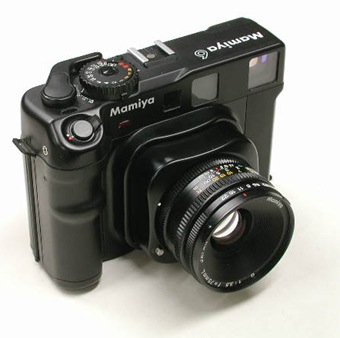 How big will this camera be? Medium Format cameras are large and boxy due to their modular nature. Will this system be smaller than current MF offerings or will it be about the size of the old Mamiya 6?
This brings up an interesting point: There is another,
How big will this camera be? Medium Format cameras are large and boxy due to their modular nature. Will this system be smaller than current MF offerings or will it be about the size of the old Mamiya 6?
This brings up an interesting point: There is another,  (makers of medium format digital cameras/backs and the CaptureOne RAW Converter) have leapfrogged Hasselblad by releasing a 60.5 megapixel digital camera system!


 Posts
Posts